Latest articles
The Materials That Power the Future: III-V Semiconductors
Silicon dominates modern electronics — but for high-brightness LEDs, fiber-optic lasers, ultra-efficient solar cells, and quantum devices, its physics simply cannot compete. III-V semiconductors like GaAs, GaN, and InP have direct bandgaps, superior carrier mobilities, and tunable optical properties that make them irreplaceable in photonics, space power generation, and 5G/6G communications. This article covers why they work, where they excel, and what they might enable next.
On the Importance of RNA Tertiary Structures
Is 98% of the transcribed RNA in humans junk? While this may be a foolish question now, just a few decades ago scientists across the world treated non-coding RNA (ncRNA) as useless, redundant cellular biproduct. Since then we have learned about the myriad of functions of ncRNAs, but we are still far from understanding what the majority of these RNAs do. In this article, I cover the history, advances, and the outlook for unveiling the functions and properties of these wonder molecules.
Self-Assembly - What We Can Learn from Biology
Proteins spontaneously assemble into highly-complex shapes with a resolution of a millionth that of the width of a human hair, yet these are some of the most highly conserved and functional molecules that have ever existed. The best human-created technology with equivalent resolution is about 1000x larger. What can we learn from these robust biological molecules and how can we utilize them for the invention of next-generation nanotechnology?
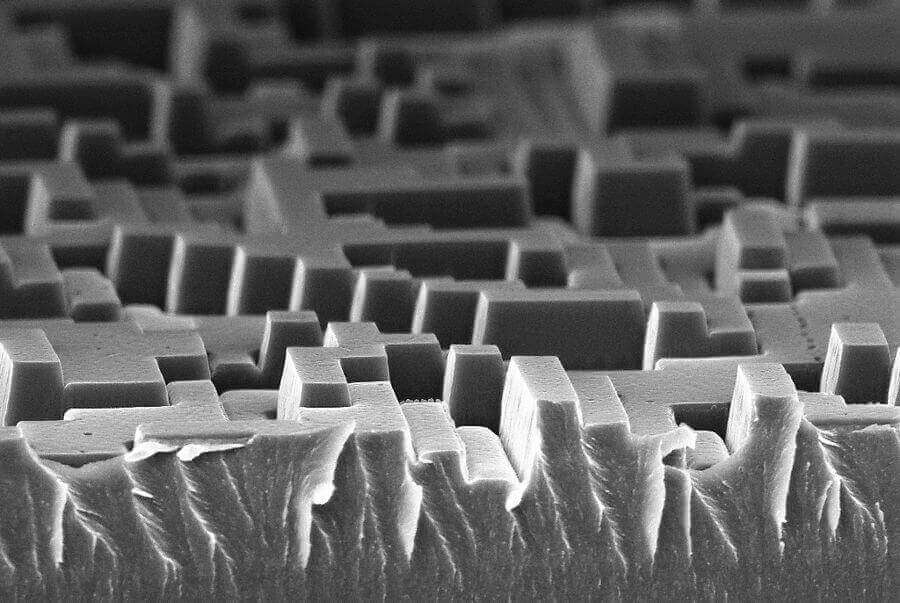
3D Diffractive Optics Through Self-Assembly: Competing with Two-Photon Lithography
Two-photon polymerization is the gold standard for arbitrary 3D nanofabrication — but it writes one voxel at a time, making macroscale photonic structures impractical. Self-assembly offers a fundamentally parallel alternative — colloidal crystals, block copolymers, and DNA-mediated nanoparticle arrays spontaneously organize into 3D periodic structures with feature sizes and refractive index contrasts ideal for visible-light photonic crystals. This article examines how self-assembly could enable a new era of scalable 3D diffractive optics.